How acute stress changes attention, memory, and human functioning, and what this means for designing technology for use in crises
Katarzyna Leszczyńska, Kinga Bigaj, Jacek Schindler
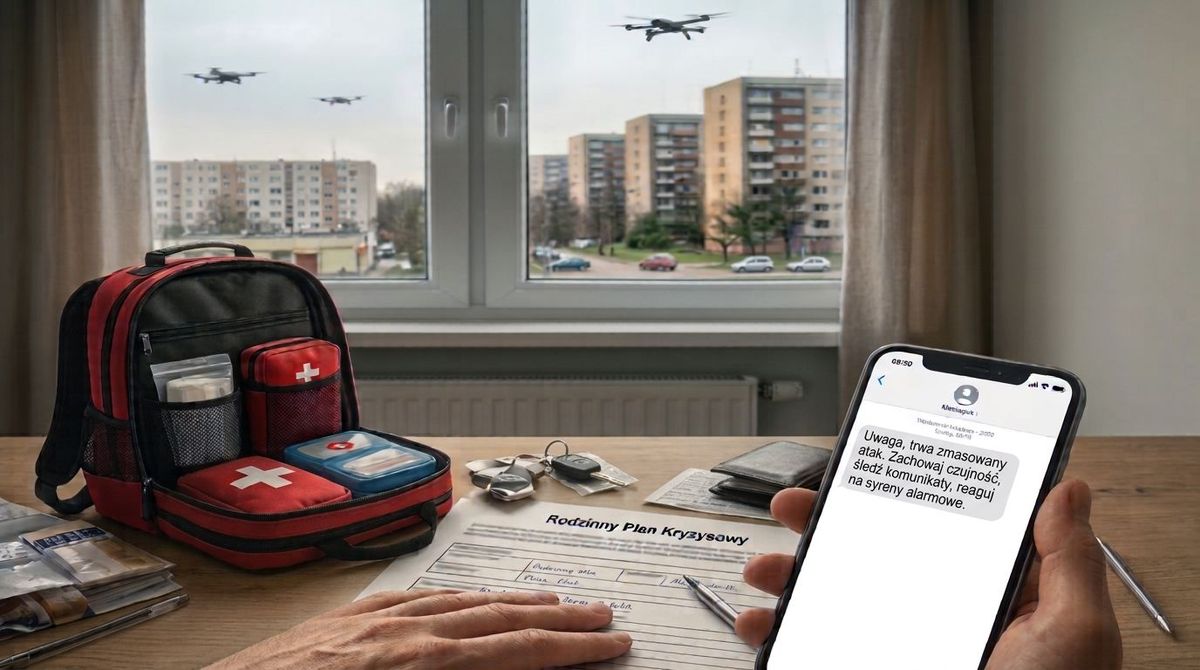
Your phone wakes you in the middle of the night. A warning appears on the screen. You need to establish two things quickly: whether the threat affects your area and what you should do now.
You open an app. You see several tabs, a map, a list of messages, and a long set of instructions. The most important information is somewhere in the middle of the text. You have to find it, understand it, and decide what to do next.
Under ordinary circumstances, you would probably manage without any difficulty. In a moment of danger, the same task may require considerably more effort.
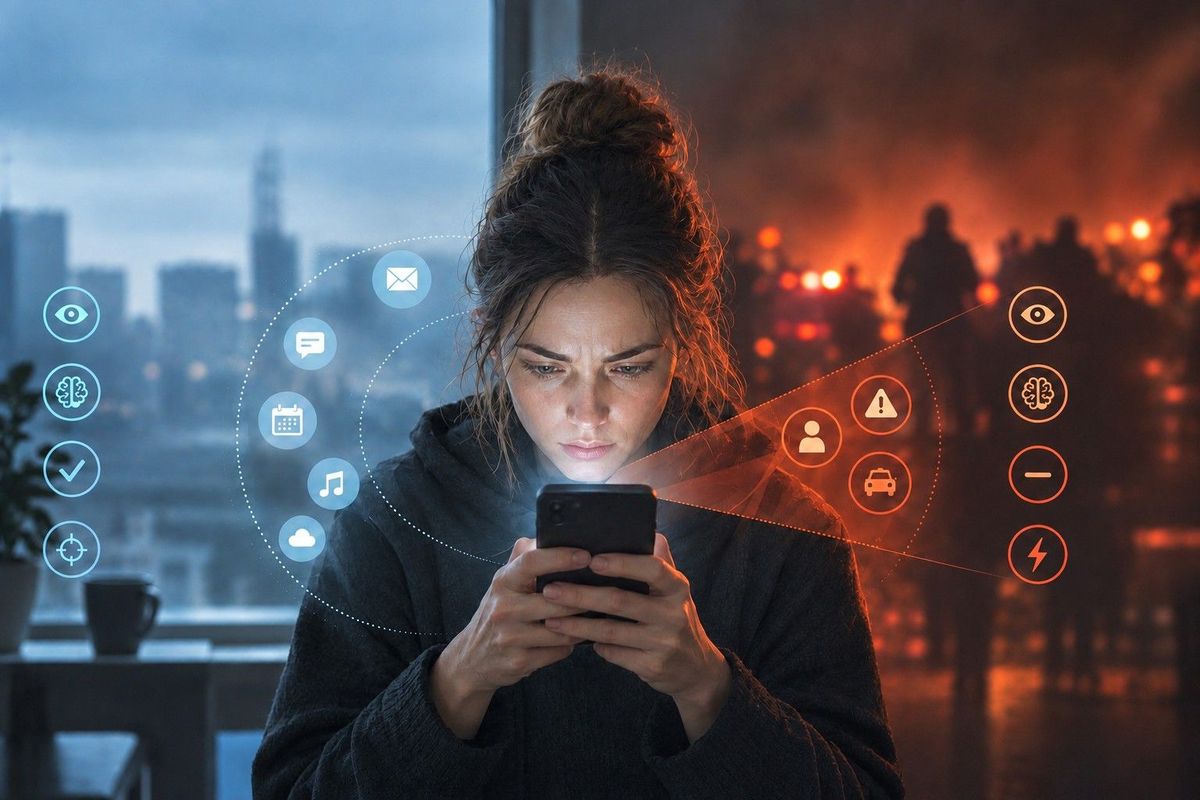
Not because you suddenly forget how to use a phone. Under intense stress, the allocation of attention, working-memory performance, and motor precision can all change. For app designers, this means thinking not only about whether an interface is convenient when users have time and are calm. They also need to check whether it will help when concentration is difficult and decisions cannot be postponed.
Attention Does Not Always Follow Our Intentions
The Attentional Control Theory developed by Michael Eysenck and his colleagues describes how anxiety affects the direction of attention. Under its influence, attention-grabbing stimuli, including threat-related cues, may exert greater influence over how information is processed. At the same time, it may become more difficult to inhibit responses to irrelevant information and to shift attention between tasks (Eysenck et al., 2007).
Imagine trying to read a warning while several questions arise in your mind at once: Am I safe? What is happening outside the window? Should I notify someone? The text on the screen has not changed, but it is harder to focus on it and select the information you need at that moment.
There is an important qualification here. Eysenck's theory concerns anxiety, not every form of acute stress. Nor does it assume that a person will always perform a task worse. Sometimes people can maintain a good level of performance, but doing so requires greater effort or additional cognitive resources.
When the Way We Perceive a Situation Changes
Research on intense stress has described, among other things, muffled sounds, tunnel vision, a sense of functioning on autopilot, and gaps in memory.
One example is a survey conducted by Alexis Artwohl among 157 police officers who had been involved in on-duty shootings. The officers completed written questionnaires about their own experiences, and the surveys were collected between 1994 and 1999. As many as 84% reported muffled sounds, 79% reported tunnel vision, and 74% described feeling as though they were operating “on autopilot.” A sense that time had slowed down was reported by 62%, while 52% reported memory gaps covering part of the event. At the same time, 71% described sharpened vision, and 17% felt that time had accelerated, so the changes did not consist solely of diminished perception (Artwohl, 2002).
Here, tunnel vision primarily means a narrowing of the visual field and a loss of some information from the periphery. It is not exactly the same as difficulty with attentional selection, although both phenomena can affect how much information a person notices.
These findings should not be applied directly to every phone user. They came from voluntary accounts given by police officers after a particular type of event, not from measurements of ordinary people's behaviour while using apps. They do, however, show that under intense stress, a person's experience of their surroundings may differ from what we know from everyday situations.
A Long Set of Instructions May Be Harder Than It Looks
Working memory allows us to hold and use information needed to complete a task for a short period of time. It enables us to remember a number, compare several options, or follow an instruction consisting of successive steps.
Amy Arnsten described the mechanisms through which even relatively mild acute stress, when it is uncontrollable, can rapidly impair the functioning of the prefrontal cortex. Her review covers studies in humans and animals, including findings indicating poorer working memory (Arnsten, 2009).
According to the author, under stress, control shifts away from the slow, considered regulation provided by the prefrontal cortex and towards faster emotional responses and habits. Attention is then more likely to follow whatever is bright, loud, or moving, rather than what matters for the task. A sense of control also plays a role: in the studies described, people who felt they had control, even if that feeling was illusory, did not show a decline in performance. For design, this means that important information should stand out clearly and users should feel that they have some control over what is happening.
Imagine a set of instructions that says: open the map, find the nearest assistance point, check its opening hours, read how to get there, and remember the contact number. Each step is simple on its own. The difficulty is that users have to retain what they have already read and connect it with the information that comes next.
Hands Under Pressure
Stress can also affect the performance of precise movements. Sometimes users have to hit a small target, make a precise gesture, or enter information without making a mistake. In calm conditions, these actions are almost automatic. Under time pressure and high arousal, they can become more difficult.
Anderson and colleagues (2019) reviewed research on the physiological response to acute stress and the performance of learned motor skills, with a particular focus on police work. The review suggests that a decline in fine motor precision is the best-documented effect. Under high stress, complex skills such as arrest techniques and self-defence can also deteriorate. The authors illustrate the difference between gross and fine motor movements with an example from popular culture: escaping from an attacker may not be difficult, but unlocking a door with a key when you have to act quickly and under pressure becomes much harder. The strength of the response depends on personal characteristics, the appraisal of the threat, and experience.
This is a review of research on motor performance, not a test of touchscreen use. The authors point out that there are few direct measurements involving police officers in stressful situations, and that many studies were conducted on shooting ranges or in simulations. The review therefore does not directly prove that a particular button size prevents errors in a crisis app. It does, however, provide a basis for treating movement precision as one of the factors to consider when designing and testing such tools.
A Warning Is Only the Beginning
The Protective Action Decision Model, or PADM, developed by Michael Lindell and Ronald Perry, describes how people move from receiving information about a threat to taking action (Lindell and Perry, 2012).
First, signals from the environment or an official warning must reach them. They then pay attention to those signals and try to understand them. Next, they assess the threat, the protective actions available to them, and the organisations involved in the situation, such as the institutions issuing warnings. The decision is also influenced by factors that make taking action easier or more difficult.
This is not a mechanical sequence that everyone goes through in exactly the same way. People may seek additional information.
This is an important point for designers. The message itself does not solve the problem. Users still have to understand what it means for them and what they should do.
Hawaii: When an Error Becomes a System Failure
On January 13, 2018, residents of Hawaii received a warning that a ballistic missile was inbound. The alert was false. A report by the US Federal Communications Commission identified a combination of human error and insufficient system safeguards as the cause (FCC, 2018).
The mistake occurred during an internal exercise. The voice message contained both wording used for a real alert and information that an exercise was taking place. The employee operating the system later said that they had not heard the words indicating that it was an exercise and had heard “this is not a drill.” They therefore believed the threat was real and selected a template intended for an actual warning from the list.
The system displayed a prompt asking whether the message should be sent. It did not distinguish between a test and a real alert, nor did it give the operator another opportunity to check the message before sending it. The test environment had also not been adequately separated from the live system.
This is an important detail. It is not enough to say that someone pressed the wrong button. The error occurred in a specific context, and the safeguards failed to stop it before it reached the public.
A correction sent through the warning systems reached residents 38 minutes later. Earlier, at around 8:20 a.m. local time, information about the false alert had appeared on social media. Between 8:00 and 9:00 a.m. local time, 911 systems across the state recorded approximately 7,755 calls, of which 2,660 were not answered by operators. The usual number of calls on a Saturday morning was approximately 250 to 350 (FCC, 2018).
This incident shows that the reliability of a warning system depends on more than the wording of the message. Procedures, checks before sending, the ability to issue a correction quickly, and the way the system handles mistakes all matter.
A Warning That Reaches Your Phone
In the United States, the Wireless Emergency Alerts system sends warnings as short messages to compatible phones through cellular networks. In Poland, a similar function is performed by Alert RCB, which, according to materials published by the Government Centre for Security (Rządowe Centrum Bezpieczeństwa, RCB) in 2018 and 2021, delivers alerts to phones by SMS. The two systems are not technically identical.
No special phone settings are required to receive Alert RCB messages. The device must be switched on and have access to a cellular network (Government Centre for Security, n.d.). The messages are intended to identify the threat and indicate the recommended action (Government Centre for Security, 2021).
In 2016, the US Federal Communications Commission decided to increase the maximum length of Wireless Emergency Alerts from 90 to 360 characters for LTE and newer networks. Expanding the system's capabilities was intended to make it possible to provide more complete information, but a higher character limit does not mean that every available character should be used (FCC, 2016).
In material published in 2021, the Government Centre for Security cited the results of a public opinion survey in which 58% of respondents considered the alerts very useful, while 10% expressed the opposite view. These figures describe people's stated assessment of the system, not its effectiveness in a specific emergency (Government Centre for Security, 2021).
What We Know About Crisis Apps Themselves
Psychological mechanisms explain some of the problems, but designers also have research on the usability of apps intended for disasters at their disposal.
Tan and colleagues (2020) analysed 1,405 user reviews of 58 such apps. They identified the importance of up-to-date and locally relevant information, app reliability, limiting advertisements, and efficient use of device resources. They also drew attention to the way sound alerts are delivered and to whether an app forces users to open external websites.
This is a valuable finding because, in a crisis, it matters not only whether an app contains the right information. It also matters whether users can rely on it and whether accessing that information involves unnecessary steps.
A study of user experiences with the A4alerts app, conducted using flood threat scenarios, also indicated the value of warnings tailored to a specific location and lists of protective actions (Meléndez Landaverde and Sempere Torres, 2023).
These findings show that questions about designing for emergencies can be tested directly, rather than inferred solely from general psychological theories.
How to Translate This Knowledge into Design
A NIST report prepared by Choong and Salvendy (2021) shows how human factors principles can be used to assess communication technologies used by emergency services. The authors analysed problems reported in interviews with 193 people working in public safety services. They considered perception, cognitive processes, physical performance, the environment, and social and organisational factors.
The report concerns technologies used by emergency services, not consumer crisis apps, and primarily presents a perspective from which usability in difficult conditions can be assessed. The principles below do not follow directly from the report's findings. They are our conclusions based on the mechanisms described above and on research into crisis apps.
1. Establish a clear information hierarchy.
The most important information and the recommended action should be easy to find. This does not mean leaving only one button on every screen. It means making sure users know what matters most at that moment.
2. Make it easier to select the right element.
Buttons should be an appropriate size and have enough space between them. Important functions should be visually distinguished from less important ones to reduce the risk of accidental selection.
3. Keep the wording brief, but do not compromise safety.
A message should clearly identify the threat and the action users need to take. Information essential to carrying out an instruction correctly should not be removed simply to make the text shorter.
4. Reduce unnecessary decisions.
Default settings can make an app easier to use when they are chosen well. However, when actions have serious consequences, users must be clearly shown what will happen before they confirm them.
5. Break complex tasks into stages.
Each stage should lead to a specific goal. Users should know where they are in the process and what comes next. Do not make them remember information that could remain visible on the screen.
6. Do not make access to essential information depend on unnecessary navigation.
When users have to open several pages, look for the right link, or enter information again, the number of actions during which they could make a mistake increases. People using crisis apps have criticised redirects to external websites (Tan et al., 2020). Our additional suggestion, which does not follow directly from the cited research, is to consider which content should be available without an internet connection.
7. Provide alternative ways to receive information.
Text can be supplemented with a sound or vibration signal if this makes the message more accessible. However, designers should not assume that every user will hear the signal or that an additional stimulus will always help. The solution must suit the situation and be tested with users.
These principles are guidelines, not universal laws. Only testing them in a particular product can show whether they genuinely make it easier to act.
Where the Evidence Ends
The studies cited here answer some of the questions. They describe different phenomena in different groups: anxiety in research on attention; stress in humans and animals in research on the prefrontal cortex; police officers' accounts in Artwohl's survey; and motor performance in the context of police work in Anderson and colleagues' review. The PADM concerns decisions made in the face of threats, while the NIST report concerns technologies used by emergency services. Research on crisis apps is closer to the subject, but it is based on user reviews and scenarios rather than app use during a real disaster. Taken together, however, these sources provide a solid basis for developing apps that can also work when users' attention and capabilities are limited. To find out what works best, we will look for answers together with our team and with users, because they are the ones who know best what they need in a difficult moment.
References
Scientific sources
Anderson, G. S., Di Nota, P. M., Metz, G. A. S., Andersen, J. P. (2019). The Impact of Acute Stress Physiology on Skilled Motor Performance: Implications for Policing. Frontiers in Psychology, 10, 2501. https://doi.org/10.3389/fpsyg.2019.02501
Arnsten, A. F. T. (2009). Stress signalling pathways that impair prefrontal cortex structure and function. Nature Reviews Neuroscience, 10(6), 410–422. https://doi.org/10.1038/nrn2648
Artwohl, A. (2002). Perceptual and Memory Distortion During Officer-Involved Shootings. FBI Law Enforcement Bulletin, 71(10), 18–24.
Choong, Y. Y., Salvendy, G. (2021). Voices of First Responders: Applying Human Factors and Ergonomics Knowledge to Improve the Usability of Public Safety Communications Technology: Findings from User-Centered Interviews, Phase 1, Volume 5. NIST Interagency/Internal Report 8340. National Institute of Standards and Technology. https://doi.org/10.6028/NIST.IR.8340
Eysenck, M. W., Derakshan, N., Santos, R., Calvo, M. G. (2007). Anxiety and cognitive performance: Attentional control theory. Emotion, 7(2), 336–353. https://doi.org/10.1037/1528-3542.7.2.336
Lindell, M. K., Perry, R. W. (2012). The protective action decision model: Theoretical modifications and additional evidence. Risk Analysis, 32(4), 616–632. https://doi.org/10.1111/j.1539-6924.2011.01647.x
Meléndez Landaverde, E. R., Sempere Torres, D. (2023). A user experience evaluation of a mobile application for disseminating site-specific impact-based flood warnings: The A4alerts app. Journal of Flood Risk Management, 16(3), e12951. https://doi.org/10.1111/jfr3.12951
Tan, M. L., Prasanna, R., Stock, K. et al. (2020). Modified Usability Framework for Disaster Apps: A Qualitative Thematic Analysis of User Reviews. International Journal of Disaster Risk Science, 11, 615–629. https://doi.org/10.1007/s13753-020-00282-x
Institutional reports and materials
Federal Communications Commission (2016). Wireless Emergency Alerts: Amendments to Part 11 of the Commission’s Rules Regarding the Emergency Alert System. FCC 16-127. https://docs.fcc.gov/public/attachments/FCC-16-127A1_Rcd.pdf
Federal Communications Commission, Public Safety and Homeland Security Bureau (2018). Report and Recommendations on Hawaii Emergency Management Agency January 13, 2018 False Alert. https://docs.fcc.gov/public/attachments/DOC-350119A1.pdf
Government Centre for Security (Rządowe Centrum Bezpieczeństwa) (2021, April 28). Alert RCB: dotychczasowe doświadczenia [Alert RCB: Previous Experience]. https://archiwum.rcb.gov.pl/alert-rcb-dotychczasowe-doswiadczenia/
Government Centre for Security (Rządowe Centrum Bezpieczeństwa) (n.d.). Alert RCB: najważniejsze pytania i odpowiedzi [Alert RCB: Frequently Asked Questions]. https://www.gov.pl/web/rcb/alert-rcb---najwazniejsze-pytania-i-odpowiedzi