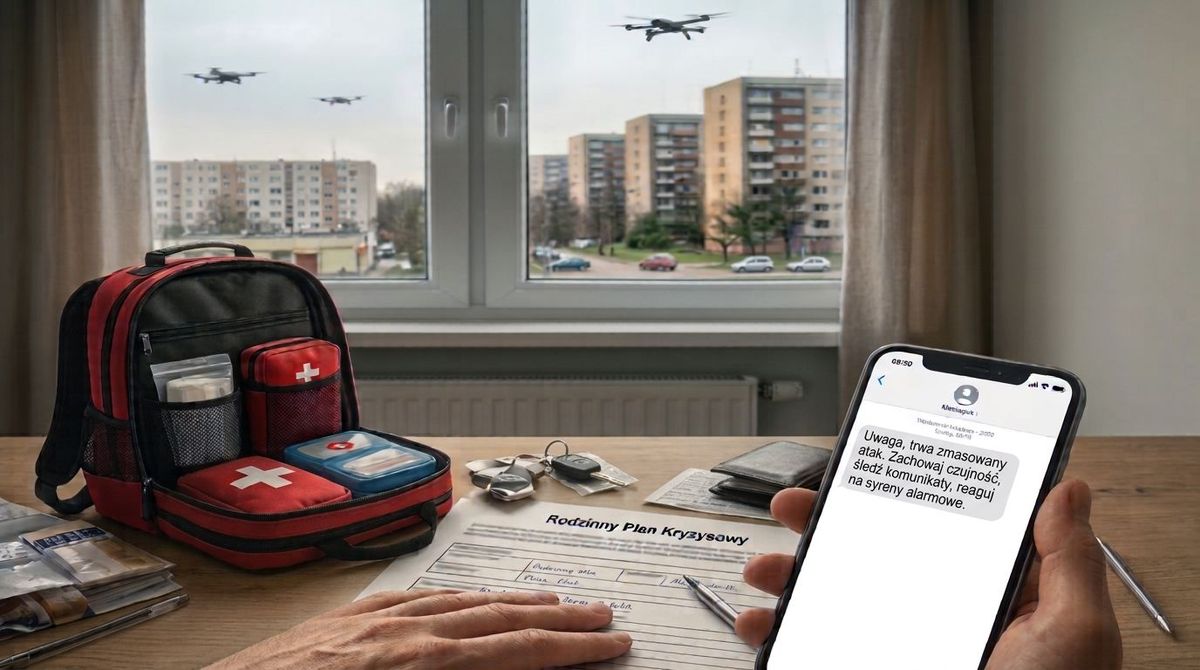

The Psychology of Becoming Accustomed to Threat
Jacek Schindler
Fear does not last forever, even when the threat itself persists. Over time, the fear response may become weaker. One mechanism that can contribute to this is habituation, the gradual reduction in response to a repeated stimulus. A person does not have to leave a threatening situation for their fear response to diminish.
This article explores how we become accustomed to threat, why fear weakens in some situations but not in others, and when a sense of calm begins to work against us.
Fear Is an Alarm, Not a Constant State
Fear is a biological alarm system. When the brain detects danger, it activates defensive responses. These may include mobilizing the body for action, such as fleeing or fighting, but also freezing and other forms of defensive response. The heart beats faster, the muscles tense, and attention narrows toward the source of the threat.
This mobilization does not have to remain at the same level with every subsequent signal. If the alarm were activated at full strength every time the same signal appeared, normal functioning would become difficult. The nervous system can gradually reduce its response to a repeated stimulus while remaining more sensitive to what is new.
Habituation: How the Brain Becomes Accustomed to Threat
Anyone who has moved close to railway tracks knows the experience: during the first few nights, every passing train wakes you, but after a few weeks, you sleep through them. This is an example of habituation, one of the basic mechanisms that allow us to reduce our response to a repeated stimulus. Habituation is a form of nonassociative learning in which the response to a repeated stimulus gradually decreases. It has traditionally been described as the simplest form of learning. It does not involve consciously deciding that a stimulus is safe or learning a new association, but rather a reduction in response to repeated stimulation. Nor is it simply fatigue or sensory adaptation.
“Becoming accustomed” is only a shorthand here: habituation primarily refers to a reduction in response to a repeated stimulus, rather than to a general process of getting used to danger. It also occurs under specific conditions, and not every repeated threatening stimulus automatically leads to habituation. The rate and extent of habituation depend, among other things, on the characteristics of the stimulus, its intensity, and the way and frequency with which it is repeated. Very strong or significant stimuli may therefore not lead to a simple, gradual reduction in response. Repeated exposure to a threatening stimulus can also have the opposite effect and produce sensitization, in which subsequent encounters strengthen fear rather than reduce it.
In the psychological literature, the air raids on London during World War II are cited as an example: before the war, mass panic was expected, yet fear responses were observed to weaken as the raids continued. This is, however, a historical illustration rather than evidence of habituation.
Not Every Reduction in Fear Is Habituation
A weaker fear response does not always mean habituation. Sometimes the appraisal of the threat itself changes. Paul Slovic’s research showed that risk perception depends not only on the probability of an event, but also on how we perceive its characteristics, including familiarity, controllability, and the potential severity of its consequences.
We may also assess the probability of a threat differently, overestimate our own control over a situation, or interpret ambiguous signals as less dangerous. These are cognitive processes, however, rather than habituation itself.
Tamed, but Not Forgotten
When fear has been learned, meaning that a signal was previously associated with an unpleasant event and that event then stops occurring, the reduction in fear may result from extinction. According to Mark Bouton’s theory, extinction does not erase the original memory. Instead, it creates new learning: in this context, the signal is no longer followed by the expected threat. Crucially, this new memory is strongly tied to the context in which it was formed. Context therefore determines which of the two memories is activated.
Fear can consequently return with the passage of time, after a change of context, or after the unpleasant event occurs again. In research, these phenomena are described as spontaneous recovery, renewal of the response in another context, and reinstatement of the response. Exposure therapy, used in the treatment of phobias and other anxiety disorders, is also linked to mechanisms of new learning, and spontaneous recovery of fear is treated in research as an experimental model of symptom relapse after therapy.
When Vigilance Does Not Decline
Repeated exposure to threat does not always lead to a weaker response. Sometimes hypervigilance develops: a state of heightened readiness to detect danger that involves continuously scanning the environment and increased reactivity to stimuli. A person listens carefully, checks repeatedly, and keeps returning in their thoughts to what might happen.
One mechanism that may maintain this heightened vigilance is attentional bias, a tendency to direct attention toward threat-related signals. A meta-analysis by Bar-Haim and colleagues found that people with elevated anxiety were more likely to direct attention toward threat-related stimuli, including in some studies using stimuli presented outside conscious awareness. The direction of this relationship, however, remains unresolved. Hypervigilance is also one of the symptoms of posttraumatic stress disorder, but it is not itself a diagnosis: in the short term after a difficult event, it can be a normal reaction.
When Calm Has a Different Source
A reduction in felt fear can also indicate emotional numbing. In research on posttraumatic stress disorder, the term emotional numbing refers, among other things, to reduced experience and expression of emotions. Litz and Gray, however, emphasized that it does not necessarily mean a general shutdown of emotion and proposed a model that gives particular attention to reduced access to positive emotions. Fear can also temporarily become weaker because of avoidance, as a person limits contact with the stimulus that triggers it. This does not mean that the fear itself has been extinguished.
Calm can also result from defense mechanisms, meaning ways of protecting oneself from content that evokes excessive anxiety. Some of these operate outside full awareness. They include, for example, denial (“this does not concern me”), rationalization, or isolation of affect, in which a person speaks about a threat in a factual manner but without emotion. These mechanisms are not signs of disorder and also occur in normal psychological functioning. In Vaillant’s hierarchical model, however, they differ in the extent to which they distort one’s view of the situation. More mature mechanisms, such as consciously setting a worry aside until later, help regulate emotions while preserving relatively good contact with reality. At first glance, this can be difficult to distinguish: the calm of someone who has consciously set a worry aside and the calm of someone who is denying the threat may look exactly the same.
When Calm Begins to Work Against Us
A reduction in the fear response does not by itself tell us whether a person is accurately assessing the threat or responding to it appropriately. A problem arises when a decline in fear is accompanied by reduced readiness to respond to genuine signals of danger. A weaker response does not mean that the threat itself has diminished: habituation reduces the response to a stimulus, but it does not change the underlying risk.
This can show, for example, when we stop following safety rules simply because nothing bad has happened so far, dismiss warning signs, or postpone preparations that could genuinely help in the event of danger.
Calm can also work against us when it results not from becoming accustomed to a threat, but from emotional numbing or avoidance. In such cases, fear does not necessarily become weaker because it is no longer needed. It may become weaker because we no longer fully experience it or because we limit our contact with its source. Such calm may make it harder to respond when the threat is actually increasing.
What matters, then, is not only whether the emotional response becomes weaker, but also how this happens. Different mechanisms can look very similar from the outside.
Summary
The fear response can become weaker through repeated contact with a threat or with a stimulus associated with it, but the mechanism underlying this reduction may vary. This does not mean that the threat itself has disappeared or that we always assess its actual significance accurately. Taming fear may make it easier to function normally in uncertain times, but it is important to remember that calm does not always mean safety.
References
American Psychiatric Association. (2022). Diagnostic and statistical manual of mental disorders (5th ed., text rev.; DSM-5-TR). American Psychiatric Association Publishing.
Anderson, J., Wang, Y., Clark, D. L., Lipp, O. V., Jarvis, M., & Ney, L. J. (2026). A systematic review of spontaneous recovery in human fear conditioning. Frontiers in Behavioral Neuroscience, 20, 1820847. https://doi.org/10.3389/fnbeh.2026.1820847
Bar-Haim, Y., Lamy, D., Pergamin, L., Bakermans-Kranenburg, M. J., & van IJzendoorn, M. H. (2007). Threat-related attentional bias in anxious and nonanxious individuals: A meta-analytic study. Psychological Bulletin, 133(1), pp. 1 to 24. https://doi.org/10.1037/0033-2909.133.1.1
Bouton, M. E. (2004). Context and behavioral processes in extinction. Learning & Memory, 11(5), pp. 485 to 494. https://doi.org/10.1101/lm.78804
Cramer, P. (2015). Defense mechanisms: 40 years of empirical research. Journal of Personality Assessment, 97(2), pp. 114 to 122. https://doi.org/10.1080/00223891.2014.947997
Janis, I. L. (1951). Air war and emotional stress: Psychological studies of bombing and civilian defense. McGraw-Hill.
Kozlowska, K., Walker, P., McLean, L., & Carrive, P. (2015). Fear and the defense cascade: Clinical implications and management. Harvard Review of Psychiatry, 23(4), pp. 263 to 287. https://doi.org/10.1097/HRP.0000000000000065
Litz, B. T., & Gray, M. J. (2002). Emotional numbing in posttraumatic stress disorder: Current and future research directions. Australian and New Zealand Journal of Psychiatry, 36(2), pp. 198 to 204. https://doi.org/10.1046/j.1440-1614.2002.01002.x
Rachman, S. J. (1978). Fear and courage. W. H. Freeman. Chapters: “Fear under air attack” and “Habituation and sensitization”.
Rankin, C. H., Abrams, T., Barry, R. J., et al. (2009). Habituation revisited: An updated and revised description of the behavioral characteristics of habituation. Neurobiology of Learning and Memory, 92(2), pp. 135 to 138. https://doi.org/10.1016/j.nlm.2008.09.012
Slovic, P. (1987). Perception of risk. Science, 236(4799), pp. 280 to 285. https://doi.org/10.1126/science.3563507
Vaillant, G. E. (1994). Ego mechanisms of defense and personality psychopathology. Journal of Abnormal Psychology, 103(1), pp. 44 to 50. https://doi.org/10.1037/0021-843X.103.1.44